Words and Photographs by Chris Marais
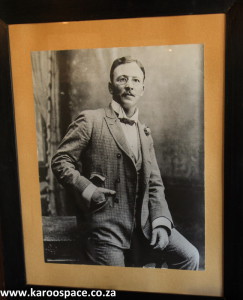
[dropcap]A[/dropcap]bout 30 years ago when I was a pup, a television company hired me to research the life and times of Barney Barnato, arguably the most colourful man to have laid hands on a diamond or a gold seam in South African history.
And that’s saying a lot, because the two giant mineral booms brought all manner of creatures out of the global social woodwork in the late 19th Century: cutthroats, thieves, gamblers, whores and prospectors – in no particular order.
Anyhow, my first port of call was Kimberley, a leisurely six-hour drive from my home in Johannesburg. And I was travelling with Leila Witkin, a flamboyant TV producer who owned a massive white German sedan. This was going to be an easy ride down into the Northern Cape.
Well. Less than 200 km out of Jo’burg, in the mining town of Klerksdorp to be precise, said white German sedan gave up the ghost. The garage man told us the alternator thingummy was kaput and he could get the new part for us in oh, say, a week.
This did not sit well with Leila Witkin and her young research assistant (me), so we bitched and moaned and then took a tatty garage ‘loaner’ down towards Kimberley.
Just before sunset we hit a bugstorm of note. All the locusts in the world had gathered at this spot somewhere between Wolmaransstad, Bloemhof and the blue horizon. And they were smashing into the windscreen of our tatty loaner with the grim-yet-gay abandon of a million kamikaze pilots.

The little windscreen wipers were valiantly clearing the green mush before us, as I slowed down to about 10 km/h. Then they died. So I had to look out of the side window and navigate my way through hordes of locusts. Grasshopper legs are tasteless yet crunchy, this reporter can today reveal.
Eventually the pestilence cleared and we pulled over for a smoke break. Which was a bad move, because the tatty loaner also had a dickey starter motor and the rain began to bucket over the Great North West.
Leila was no stick-shifter, so she had to push the tatty loaner in her high heels while I steered. Eventually the engine puttered into life and we slowly made our way into Kimberley to a warm supper and a bit of a grumble about the day.
All these years later, as I read about how the eager miners used to arrive in Kimberley from all parts of the world, I see we were no different. To get to the City That Sparkles, you have to pay your dues…
[dropcap]T[/dropcap]he diamond diggers have mostly left Kimberley, but their legacy remains behind – in spades. So to speak.
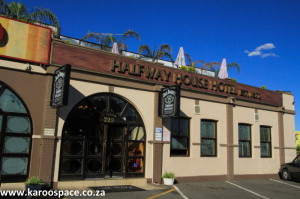
I’m currently having a beer at The Halfway House Hotel bar in the Belgravia district of Dutoitspan Road. They call it ‘The Half’ and it’s the only drive-in bar in the world. This is also where Rhodes used to ride up on his horse and be served his poison of choice.
Above the bar counter there’s a sign that says:
“I’ll stand any man a drink but I’ll never lend him a fiver – Barney Barnato.”
I’m staying next door at a busy warren of a guest house that used to belong to Daniel Westwood Greatbatch, an architect who seems to have designed just about every building of historical value in Kimberley.
But Kimberley wasn’t always about top hats and curlicues, polite bows and pinafores. When the first 20 000-odd fortune hunters arrived after many days of travel from Cape Town along the Diamond Way, they were met by vast empty plains and visited by horrendous dust storms and, ahem, locust plagues.
How did you survive? You drank. A lot.
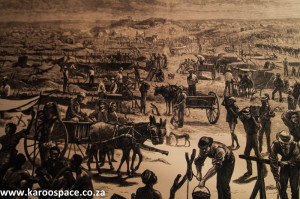
The many tent-bars stayed open all day and all night, as hookers and kopje-wallopers (the local name for diamond middle-men) and card sharps and remittance men slaked their giant collective thirst.
And into all of this madness (think crowd scene from Paint Your Wagon) came young Barney Isaacs, soon to be reincarnated as Barney Barnato, actor, prize-fighter, seller of smelly cigars and, initially, a kopje-walloper. Eventually, too, a multi-millionaire who came to a sticky end at sea.
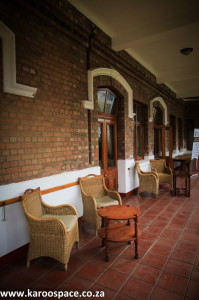
But where did the toffs hang out after hours? Guys like, say, Cecil John Rhodes? To get the skinny on all that, I venture further down Dutoitspan Road into the heart of the city, where lurks the grand old Kimberley Club.
While the hoi and the polloi rabbled away in dives like The Old Cock, the Hard Times and The Scarlet Bar, young Cecil and his mates hung their hats in a much more civilised spot. In fact, as you enter by the discreet back entrance, there’s a statue of Rhodes looming down. He’s got papers in his hand and it looks like he wants you to sign them – right away, please. Chop chop.
The Kimberley Club survived it all, including the infamous Siege of Kimberley. They had a lot of panache but little in the way of lamb chops during this 124-day Anglo-Boer War ‘inconvenience’ as the Boer forces surrounded them. No worries. Just throw a horse into the pot and serve it up for Christmas and call it ‘grilled prime veal fillet garni a la Siege’.
The club still has more than 500 loyal members, but has now opened its doors as a boutique hotel. It is still elegant, and the ghosts that traipse up and down its wooden staircase are worth double the fare, in my lights.
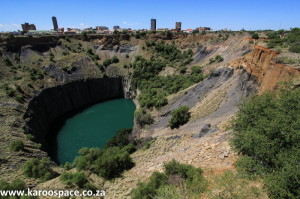
[dropcap]B[/dropcap]ut where’s the Engine Room of Kimberley, where it all happened? Why, the Big Hole of course. It was once a respectable piece of geography called Colesberg Kopje. Then it disappeared and became The Big Hole, currently residing on Tucker Street in Kimberley.
In its time, it yielded 2 000-odd kg of diamonds from just more than 22 million tonnes of excavated earth.

The Big Hole has a wonderful museum around it, complete with an Old Town where you can still hear the old honky tonk piano and visit Barney’s Gym. At the entrance to the museum, you can check out the old steam fire engine in front of the Pulsator Building and then walk down a long gantry to peer down at the pea-green waters of The Big Hole.
Thirsty again, however. Goodness me, this dusty Kimberley air makes one cry out for flagons of cold ale. So off I go to The Star of the West nearby.
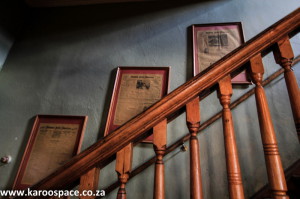
As a Big Hole miner, you used to pop by here in the mornings and be fortified with a mug of steaming Bovril soup. Then after your time at the diggings, you’d come back to ‘The Star’ and order something stronger. Upstairs is where Diamond Lil and her charming ladies worked in shifts. Happy days.
Lest you are led to believe that I’m flogging you nothing more than a colourful country pub crawl, let me say something about the incredible Africana Library, just a spit away from the Kimberley Club.
They love bona fide researchers here, whether you’re an academic or a guy like me, who wanted to peer into Barney Barnato’s world for a while. You telephone ahead with your specific request and when you arrive, there it is. All laid out with their compliments.
A word of warning about the Africana Library in Kimberley. Don’t get sucked into back-issues of the Diamond Fields Advertiser. You might lose three days of valuable research time. Like I once did.
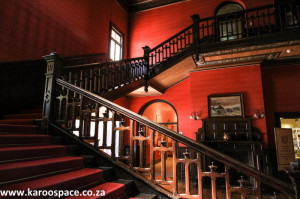
[dropcap]N[/dropcap]ext up is the McGregor Museum, and the Duggan-Cronin Museum next to it. The building, which was once the Kimberley Sanatorium, is a grand old pile in Belgravia and the headquarters of a rather large museum complex.
To put it in a nutshell, this is a place where you can learn about the Kimberley Siege, how people were buried in the Stone Age, the lives of Lucy Lloyd and Wilhelm Bleek who translated the thoughts and words of the !Xam people, many palaeo-insights and what the world was like when Jan van Riebeeck first landed on these shores. There’s a lot going on at the McGregor.
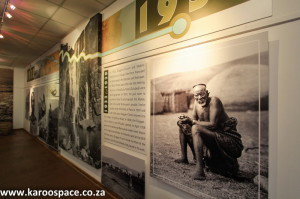
Next door, in the midst of other exhibitions, I learn about one Alfred Martin Duggan-Cronin, who spent more than 50 years on photographic field trips through Southern Africa. He first took pictures of the black miners in Kimberley and was subsequently fascinated with where they came from.
So he ended up building a huge body of work in places like deep Mozambique, then southern Rhodes, Bechuanaland and Pondoland, earning the Matabele name of Thandabantu in the process. It means ‘someone who loves people’ – and it shows in his work.
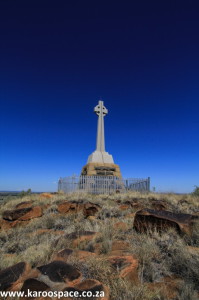
[dropcap]L[/dropcap]ike many middle-aged boys, I love a good battlefield. So I head south to Magersfontein. The museum offers a short movie on the dreadful battle in which so many Scotsmen died in what became a Boer ambush.
And as I walk up the hill to the looming Celtic cross that commemorates the day, I can sense the old spirits across the veld. The last time I felt like that was a decade ago at the foot of Isandlwana Hill in Zululand. There is little to celebrate up here – except, perhaps, the fact that all these poor souls are remembered in some way.
Your Kimberley Week
Monday:
- The Big Hole experience. www.thebighole.co.za or telephone 053 830 4423
- The Kimberley Club (phone ahead): Site: www.kimberleyclub.co.za; Tel: 053 832 4224
Tuesday:
Visit the historic pubs of Kimberley.
- The ‘Half’: Site: www.halfwayhousehotel.co.za; Tel: 053 831 6324
- Star of the West: Tel: 053 832 6463
- Ghost Tours of Kimberley: Tel: 083 732 3189 or 082 572 0065.
Wednesday:
- The McGregor Museum: Site: www.museumsnc.co.za; Tel: 053 839 2700
- The Duggan-Cronin Museum: Tel: 053 839 2722
- Sol Plaatje Museum (phone ahead): Tel: 082 804 3266
Thursday:
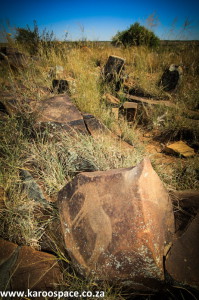
- An outing to the Wildebeestkuil Rock Art site: Site: www.wildebeestkuil.itgo.com; Tel: 053 833 7069
Friday:
- The Battle of Magersfontein site: Site: www.museumsnc.co.za; Tel: 053 833 7115
Saturday:
- The William Humphreys Art Gallery: Site: www.whag.co.za; Tel: 053 831 1724/5
Sunday:
- The Historic Belgravia Architectural Walk.
Begin at the McGregor Museum, where you can purchase a guide on the walk and follow it.
- Only for Serious Birders: Kamfer’s Dam flamingos.

Where to Stay & Eat:
Kimberley has many accommodations and dining spots to suit all tastes and budgets. Consult the Kimberley Meander site and the Kimberley Tourism site (below).
Your Kimberley Info:
- The Kimberley Meander (a variety of different walks and tours on offer): Site: www.kimberleymeander.co.za; Tel: 053 831 1081
- Kimberley Tourism: Site: www.kimberley.co.za; Tel: 053 832 7211
(This article first appeared in SA Country Life Magazine in August 2013).