
Text and Photographs by Chris Marais
When the first 20 000-odd fortune hunters arrived after many days of travel from Cape Town along the Diamond Way, they were met by vast empty plains and visited by horrendous dust storms and locust plagues.
The many tent-bars stayed open all day and all night, as kopje-wallopers (the local name for diamond middle-men) slaked their giant collective thirst.
And into all of this excitement and confusion came young Barney Isaacs, soon to be reincarnated as Barney Barnato, actor, prize-fighter, seller of smelly cigars and, initially, a kopje-walloper whose fortunes were about to change for the better.
But where did the toffs hang out after hours? Guys like, say, Cecil John Rhodes? To get the skinny on all that, let’s venture down Dutoitspan Road into the heart of the city, where lurks the grand old Kimberley Club.

While the hoi polloi rabbled away in dives like The Old Cock, the Hard Times and The Scarlet Bar, young Cecil and his mates hung their hats in a much more civilised spot. In fact, as you enter by the discreet back entrance, there’s a statue of Rhodes looming down. He’s got papers in his hand and it looks like he wants you to sign them – right away, please.
The Kimberley Club survived it all, including the infamous Siege of Kimberley. They had a lot of panache but little in the way of lamb chops during this 124-day Anglo-Boer War ‘inconvenience’ as the Boer forces surrounded them.
The club still has its loyal members, but has now opened its doors as a boutique hotel. It is still elegant, and the ghosts that traipse up and down its wooden staircase are really worth double the fare.
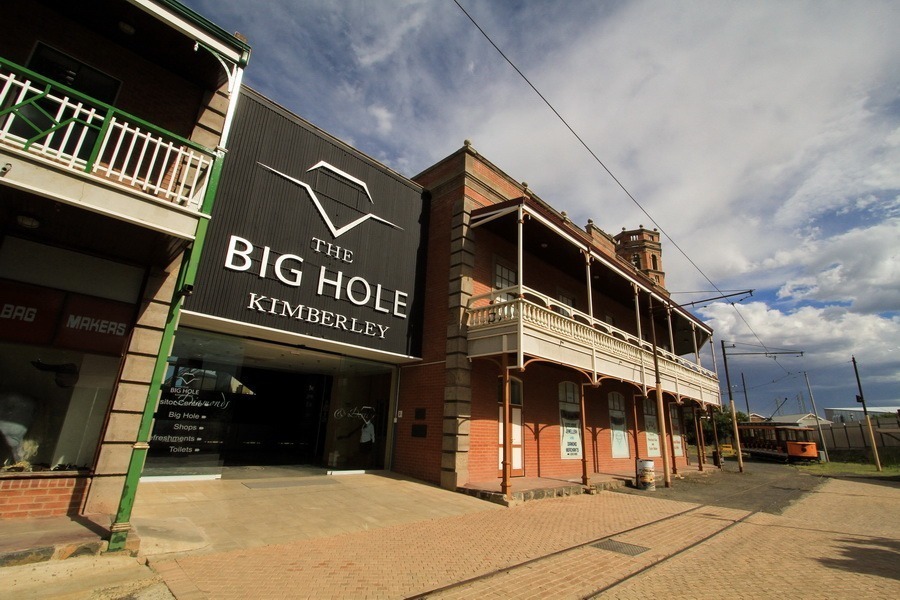
The engine room of Kimberley was, of course, the Big Hole. It was once a respectable piece of geography called Colesberg Kopje. Then it disappeared and became The Big Hole, currently residing on Tucker Street in Kimberley.

In its time, it yielded 2 000-odd kg of diamonds from just more than 22 million tonnes of excavated earth.
The Big Hole has a wonderful museum around it, complete with an Old Town where you can still hear the old honky-tonk piano and visit Barney’s Gym. At the entrance to the museum, you can check out the old steam fire engine in front of the Pulsator Building and then walk down a long gantry to peer down at the pea-green waters of The Big Hole.
Next up is the McGregor Museum, and the Duggan-Cronin Museum next to it. The building, which was once the Kimberley Sanatorium, is a grand old pile in Belgravia and the headquarters of a large museum complex.

This is where we learn about the Kimberley Siege, how people were buried in the Stone Age, the lives of Lucy Lloyd and Wilhelm Bleek who translated the thoughts and words of the !Xam people, many palaeo-insights and what the world was like when colonists from Europe first landed on these shores.
Next door, in the midst of other exhibitions, we learn about one Alfred Martin Duggan-Cronin, who spent more than 50 years on photographic field trips through Southern Africa. He first took pictures of the black miners in Kimberley and was subsequently fascinated with where they came from.
So he ended up building a huge body of work in places like deep Mozambique, then southern Rhodes, Bechuanaland and Pondoland, earning the Matabele name of Thandabantu in the process. It means ‘someone who loves people’ – and it shows in his work.
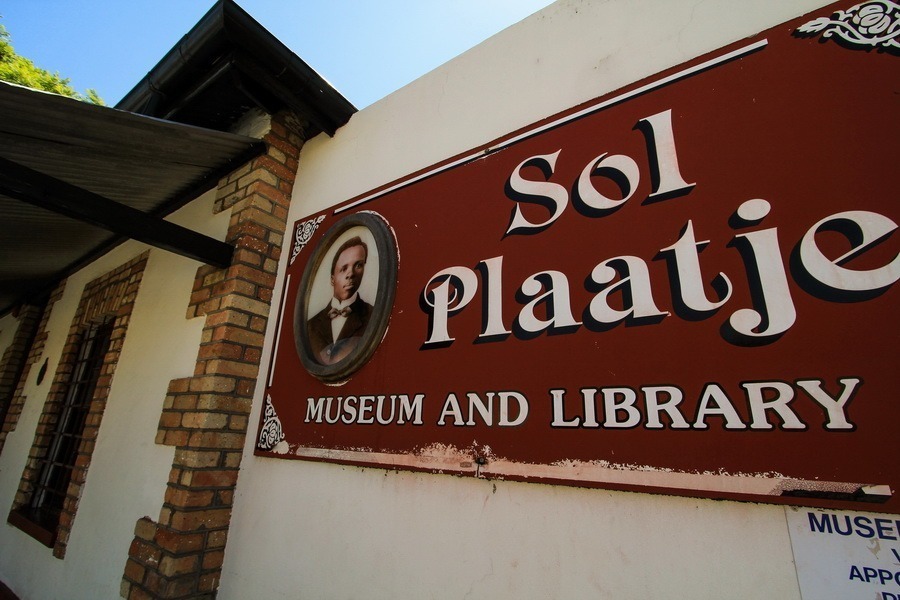
The famous writer and activist Sol Plaatje once lived in Kimberley, and his home is now officially the Sol Plaatje Museum full of books of historical significance. Pride of place in that extensive library belongs to a copy of Mhudi, the first English novel to be written by an African.
An outfit called Native Minds Tours organises guided visits to Galeshewe Township adjacent to Kimberley. You can tour the township on bicycles, visiting the cultural village, the Mural Arts Project, the Kgosi Galeshewe Art Gallery and round it all off by attending a performance of the Galeshewe Theatre Organisation, which specialises in Northern Cape community stories. Kgosi Galeshewe, after whom the arts gallery is named, led his Batlhaping people in what became known as the Phokwane Rebellion against the British colonial government in the 1870s.
Heading south out of Kimberley, we visit the Magersfontein battlefield, where the Highland Brigade was decimated by Boer forces waiting in ambush, on December 11, 1899.
We watch the short film reconstruction of the battle in the museum at Magersfontein, and then take a short walk up a hill to the looming Celtic cross that commemorates the fateful day.
In October, the nearby upmarket Magersfontein Memorial Golf Estate sees the start of the Battle of the Bikes Festival, a very popular outdoor family event that welcomes mountain bikers, e-bikers and gravel bikers over three routes.

The following day, we dedicate to Mokala National Park, about 70km southwest of Kimberley. In this varying landscape of dolerite hills and grassy plains, expect to see breeding herds of everything from buffalo to blue wildebeest, with Tsessebe and Roan Antelope included.
The birders among us will, of course, go for sightings of the black-chested prinia, blacksmith lapwing and the short-toed rock thrush, not to mention the cinnamon-breasted bunting or the freckled nightjar.
On our last day trip from Kimberley, we head north in the direction of Barkly West to Wildebeest Kuil and its famous rock engravings, presumably etched into the dolerite by people from the Later Stone Age. Wildebeest Kuil belongs to two San groups, the !Xun and the Khwe, and it is advisable to take a guide from one of these groups to take you on an interpretive tour of the site.
Look out for Kousop’s Rock, a memorial to a Khoe-San rebel who fought the colonists here and was killed, along with 130 of his clan, in 1858.

KNOW BEFORE YOU GO
Kimberley is full of vivid stories and remarkable characters, and is rightly rich in museums. Visit them to imbibe the spirit and history of this fascinating diamond city.
USEFUL CONTACTS
Kimberley: https://www.kimberleycity.co.za/
Kimberley Club (now a guest house): https://kimberleyclubguesthouse.co.za/
Big Hole and old town attractions: https://thebighole.co.za/
McGregor Museum: https://museumsnc.co.za/
Duggan-Cronin Gallery: https://museumsnc.co.za/satellites/duggan-cronin-gallery/
Sol Plaatjie House Museum: Tel: 053 833 2526
Native Minds Tours: 078 069 5104
Sol Plaatje Information Centre: 053 830 6779
Magersfontein Battlefield: https://museumsnc.co.za/satellites/magersfontein-battlefield-museum/
Mokala National Park: https://www.sanparks.org/parks/mokala
Wildebeest Kuil Rock Art Centre: https://museumsnc.co.za/satellites/wildebeest-kuil-rock-art-centre/
- For an insider’s view on life in the South African Heartland, get the Karoo Quartet set of books (Karoo Roads I-IV with black and white photographs) for only R960, including taxes and courier costs in South Africa. For more details, contact Julie at julie@karoospace.co.za


